
Good habits require ongoing maintenance. Most popular habit books don’t cover this topic1, but I’ve made a system that’s simple and lightweight and works.
It has three components:
Use tiny habits
Journal about my habits every day (as little as two words)
Make sure it’s fun
1. Use tiny habits
A while back I met the founder of a habit-formation-software company. When I asked what theory his software was based on he pointed me towards a book called Tiny Habits by BJ Fogg. I had heard of the more popular Atomic Habits which was published a year earlier, but according to my recommender (and online reviewers) Tiny Habits offered a more coherent and opinionated guide.
I gave it a read, thought it was great, and now follow the book’s prescriptions, making tiny-habit “recipes” that look like the following:
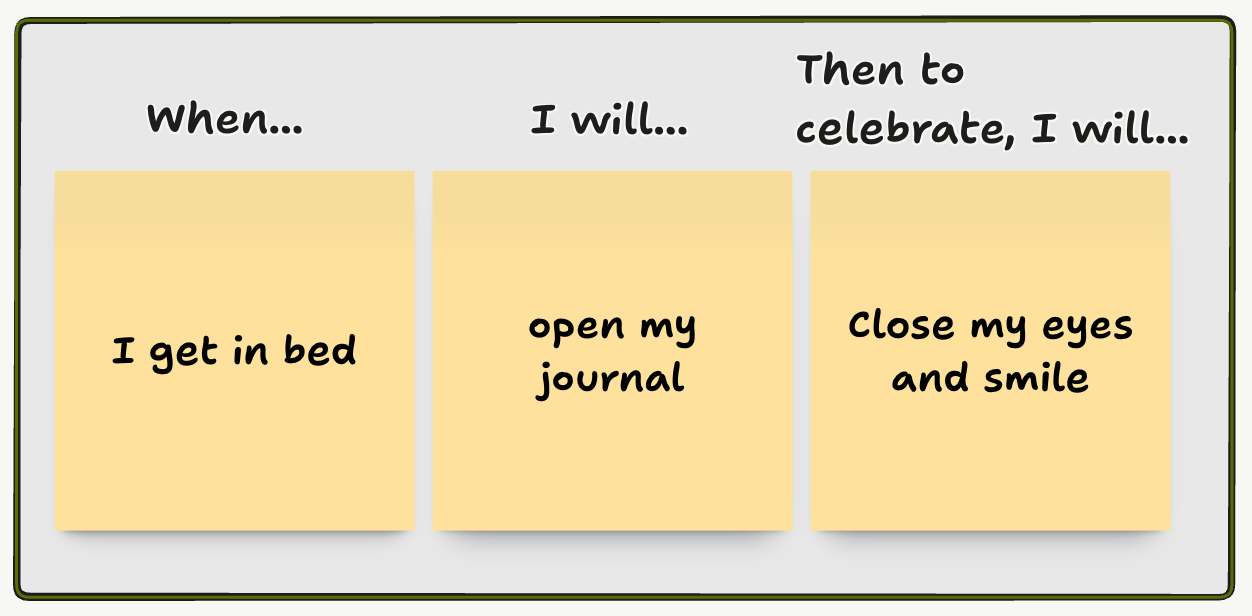
The recipes for the habits I make are all like this: after some trigger (such as another action I’m already regularly taking), I perform some very simple (“tiny”) behavior, then I celebrate. The celebration rewards the tiny behavior and causes it to stick. In the example above, though I truly intended to write in my journal, I keep the habit small - I just need to open it. This way the habit is very easy to start and maintain, and the full intended behavior of writing in my journal usually follows anyways (it’s pretty easy to journal once it’s open in front of you).
I recommend reading the book, which includes many more specific recommendations for various aspects of setting good habits. But even once you’ve learned the book’s frameworks, that’s still not enough to actually set good habits (in my experience). You need to apply the right strategies at the right times throughout your life. For me, that’s where the journal comes in.
2. Journal about my habits every day
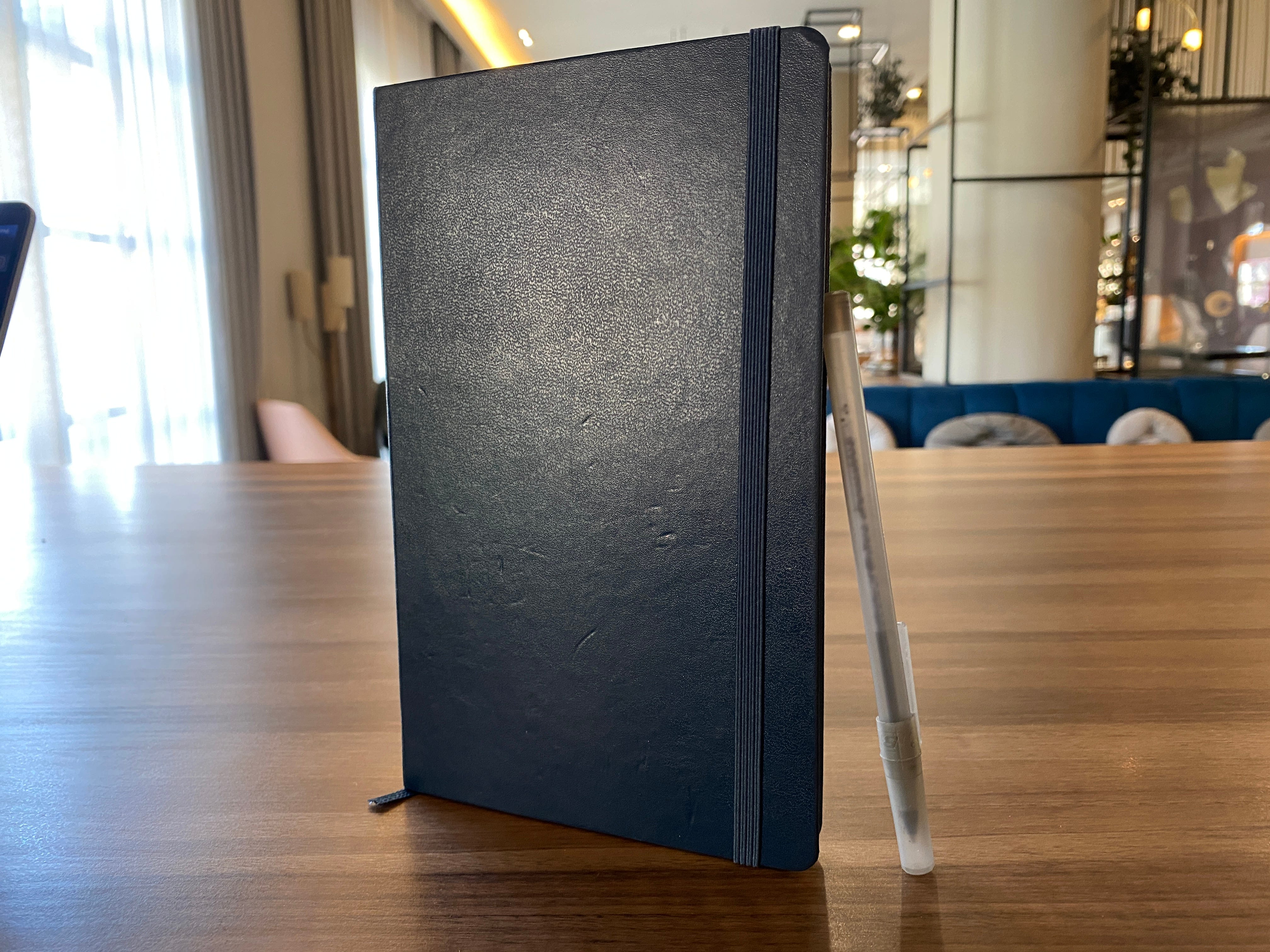
Every day I write in my journal about a variety of things, one of which is my routines or habits. I use symbols to delineate the sections of my daily entry, so, when it’s time to write about habits, I write and circle a capital “H”2. Then I free-write about habit strategy, on topics like:
What new problems do I want to solve?
What new habits or routines might be helpful?
How can I make those into three-part recipes?
How are my ongoing habits going? How could they be better?
If I stopped/failed at something, why?
The time and effort I spent on this “Habits” portion of my daily journal entry varies widely. If, for example, I moved apartments recently, then I’ll end up writing about what pieces of my old routines I should keep and how that all will work in my new environment. And at the same time I’ll be spending effort outside of my journaling sessions on implementing my new intentions. But if my routines feel stable, in my journal I might just write a quick “all good” and be done with it. So the journal routine stays lightweight and is easy for me to keep up through the ebbs and flows of life. I can even ignore it for a while, and as long as I come back eventually, I trust that I’ll be able to restart the reflective-workshopping process and my habits will end up in a good place. I try to make all of my personal systems forgiving in this way, to account for life’s curveballs.
This system helped me set up my sleep habits and my current morning routine of yoga, meditation, cleaning, and the consumption of various hot beverages. Of course it’s not perfect - it’s only as good as the things I already basically know how to do. But it does give me space to follow through with my intentions, and a good mechanism to course correct when things go awry, which is basically to write about the issues I’m facing each day until I’ve solved them.
3. Make sure it’s fun
If you’re actually interested in trying this I have one last suggestion, which is to make sure it’s fun. If you don’t already enjoy journaling, then step one is to come up with a journaling practice that you enjoy. That probably would involve more than just writing about habits, as it does for me.
Before I started my habit-journaling I was already writing every day about things I was thankful for, things I accomplished, ways I might improve, and the next day’s plans - each in its own section delineated by a unique symbol. Even with those guideposts my writing ranges freely, allowing me each day to make sense of my life and to work towards expressing my ideas and aspirations. With that practice in place, a “Habits” section was an easy addition, and contributed to an overall rewarding experience.
The system described here is pretty simple, but I couldn’t find a description of anything similar on the internet. I suppose most people are looking for how to set good habits right now, without thinking about the more important question of how to keep good habits for life. For me, habit journaling fits the bill.
…if my brief Claude queries are to be trusted
Actually I do an “R” for routines, but I’m leaning on the phrase “habits” for this piece