

Last week I wrote (here) about my recent success in pushing through a post-viral fatigue spell, running six miles and coming out more energetic on the other end. I realized I have more to share - a long history of experiences and attempted interventions which together could form a useful fatigue-recovery case study. Today I describe my experiences with hypnotherapy, an intervention which changed how I understand my illness and plausibly helped me recover faster.
…
I learned of hypnotherapy through a close friend who used it to treat his chronic shoulder pain. He had a positive experience and eventually offered to buy me a session with the same practitioner. That was a year ago, three months after the start of my illness. I appreciated the thoughtful gift but wasn’t eager to begin: I trusted that my fears, pains, and other body signals were all well calibrated to prevent me from taking harmful actions in my fragile state.
Ten months later my perspective had shifted. As described in last week’s post, a series of positive experiences with exercise caused me to reevaluate the wisdom of my symptoms. By January 2026 I felt I was ready, and I reached out.
At the time I understood my condition as follows (excerpts from the intake form):
What was I experiencing?
Presenting issues:
Since having mono a year ago, I’ve had some fatigue issues. Things have actually improved in the last few weeks and I have not felt many symptoms even though I’ve been more active (e.g. have been back to the climbing gym about twice a week). So I’m currently optimistic, but also things tend to change randomly, so I’m not fully optimistic.
…
If you are experiencing discomfort, on a scale of 0 - 10, which number represents it at its most severe?
5
And which number represents it at its best?
0? (Or maybe 1. If I think about it, there’s usually something there. But I think there are times when I don’t think about it and just feel fine.)
Describe the nature of the discomfort using any descriptors or metaphors that feel most appropriate:
It starts in my shoulders and neck, which will feel sore and kind of sick. And then maybe I’ll feel it in my arms too. There’s a sort of heaviness sometimes, like, just taking action feels a bit difficult, like there’s a bit of a haze separating me from the world or from the actions I might take. Things just don’t feel very fluid. I do associate a particular “inflammation-y” feeling as well that’s very difficult to describe, but where there’s a kind of tenderness in my shoulders, or my chest, or my gums, or my arms… as I focus on these places there’s this field of tenderness. Overall things just feel delicate, like I’m made of glass (slightly).
And what was I hoping to change?
I want to be not afraid of physical exercise, and to feel good after doing it. And to be not afraid of work, and not afraid of going to New York. Just generally not afraid of doing hard/exciting things. I want to feel like I can push myself to the limit and feel rewarded for it, and like I am full of energy.
I also listed some moments that made me happy to remember, which would become relevant in the upcoming session:
There is one spot in Castle Rock that I’ve been to multiple times, napping on the grass on an overlook…
…
Getting acquainted with my red field
I logged into Zoom for my first session. After probing some core facets of my life, the hypnotist asked me to come up with an image to represent my symptoms. “It’s like my body is made of glass,” I said. He asked again:
“Can you describe it as something separate from your body?”
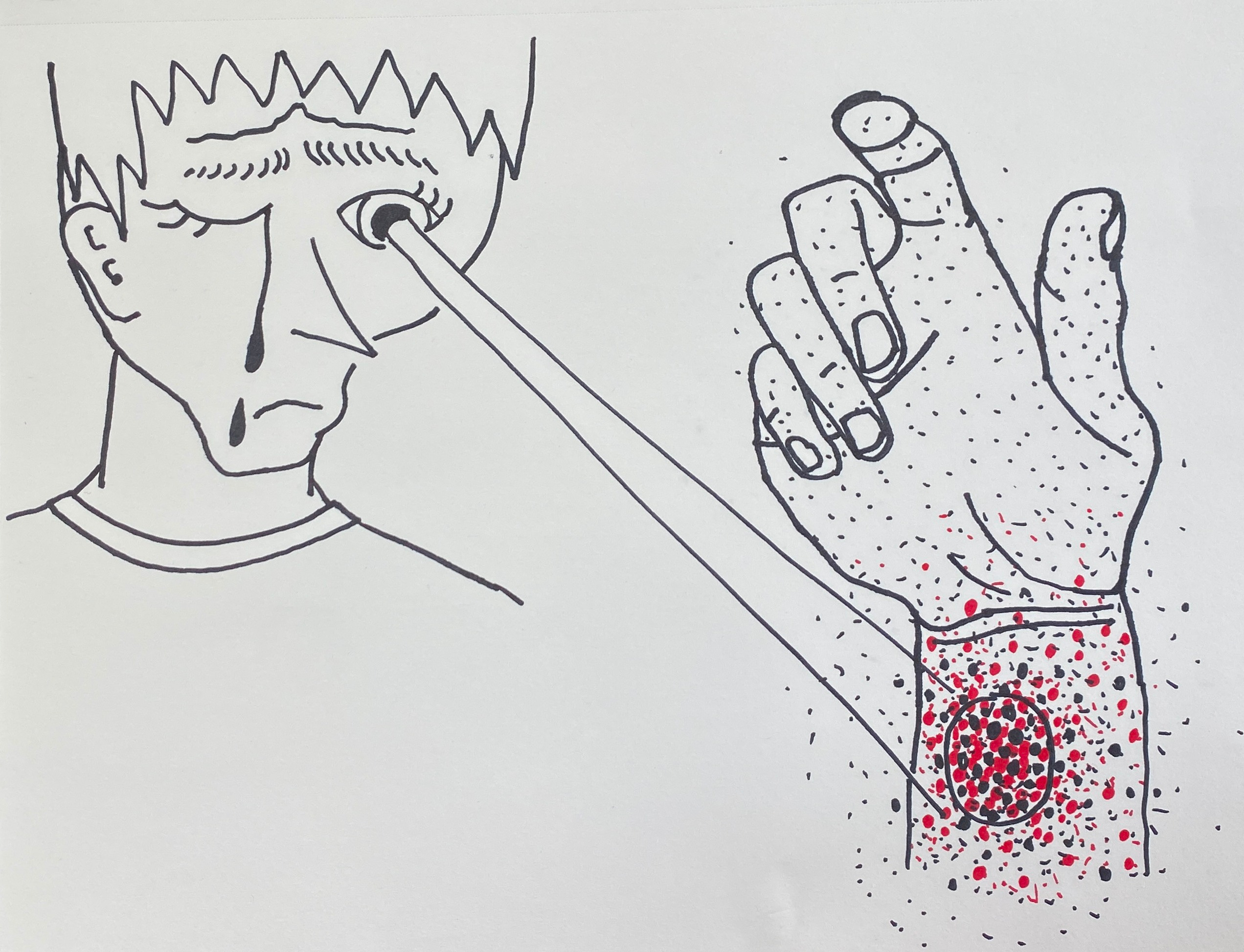
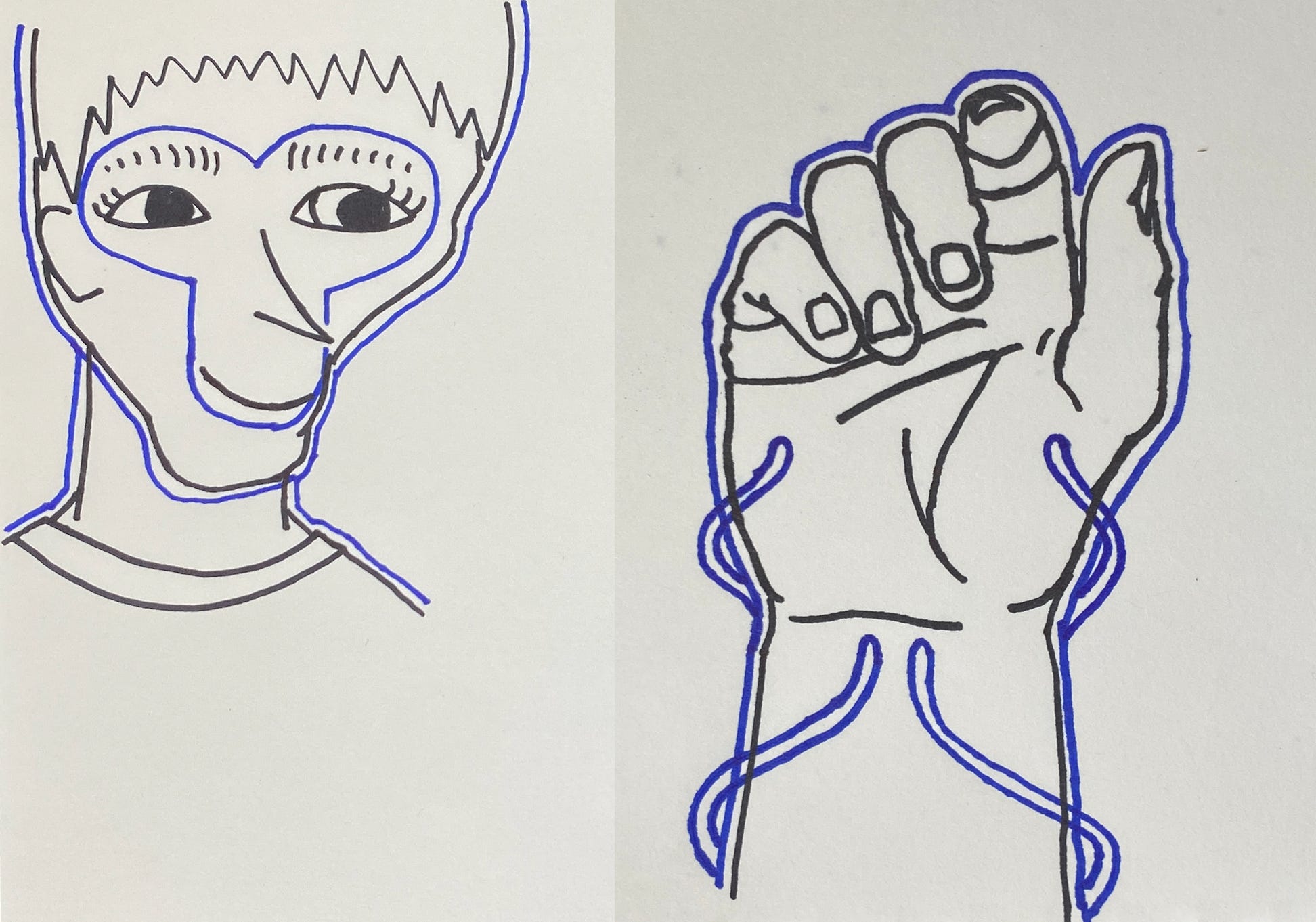
I thought. I said “it’s like a red field that permeates my body and grows wherever my attention touches it, concentrating and spreading inward. Whichever parts it occupies are filled with a diffuse pain, and I am compelled to hold them still, to move them with great gentleness and care.”
He explained that this field could be thought of as a piece of software that runs on my nervous systems and/or subconscious mind. Our goal was to update this software.
To do so he would guide me into a relaxed dreamlike state, and in that state I would perform a sequence of visualizations and mantras. He assured me that my participation would be voluntary throughout. He taught me a “vagus-breathing” exercise, suggested as an intervention that I might use during times of anxiety, then he guided me through a body scan, and then, finally, deep into the hypnotic state.
Upgrading my software
Hypnosis was indeed a bit like dreaming, but less intense. I was mildly aware of my true surroundings and occasionally veered off into half-formed thoughts, but each time I eventually came back to the visualizations. Over time I experienced a pronounced shift in my mental background: I felt more calm, free, and fearless, as if I were “trying out” a different way of being.
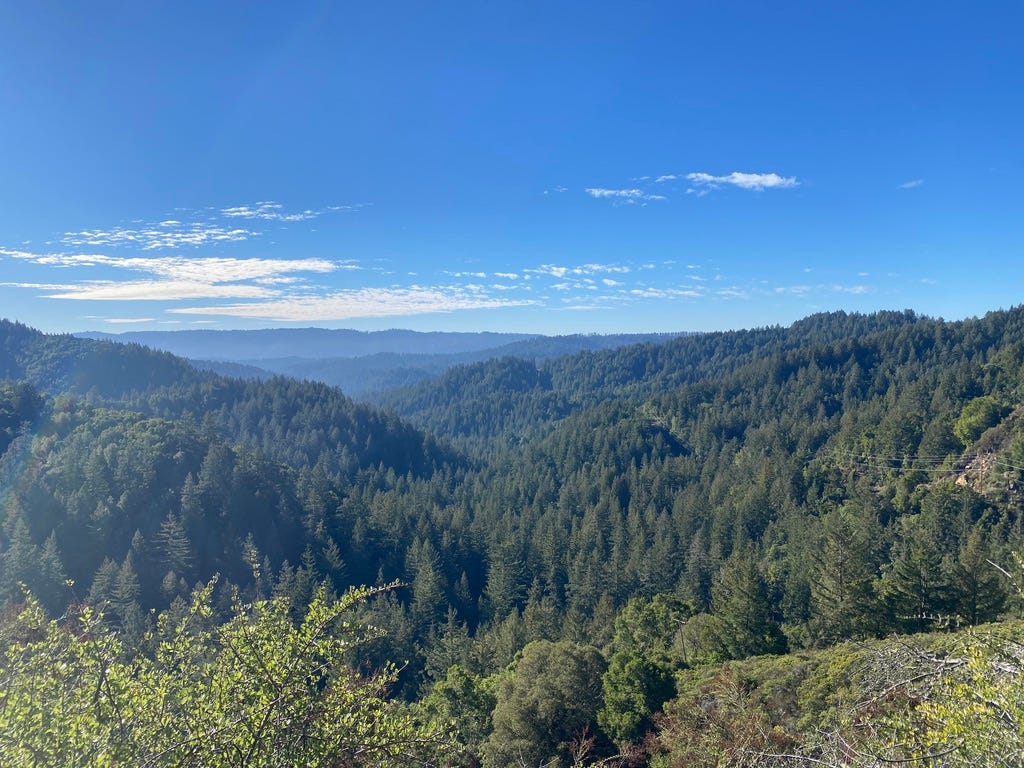
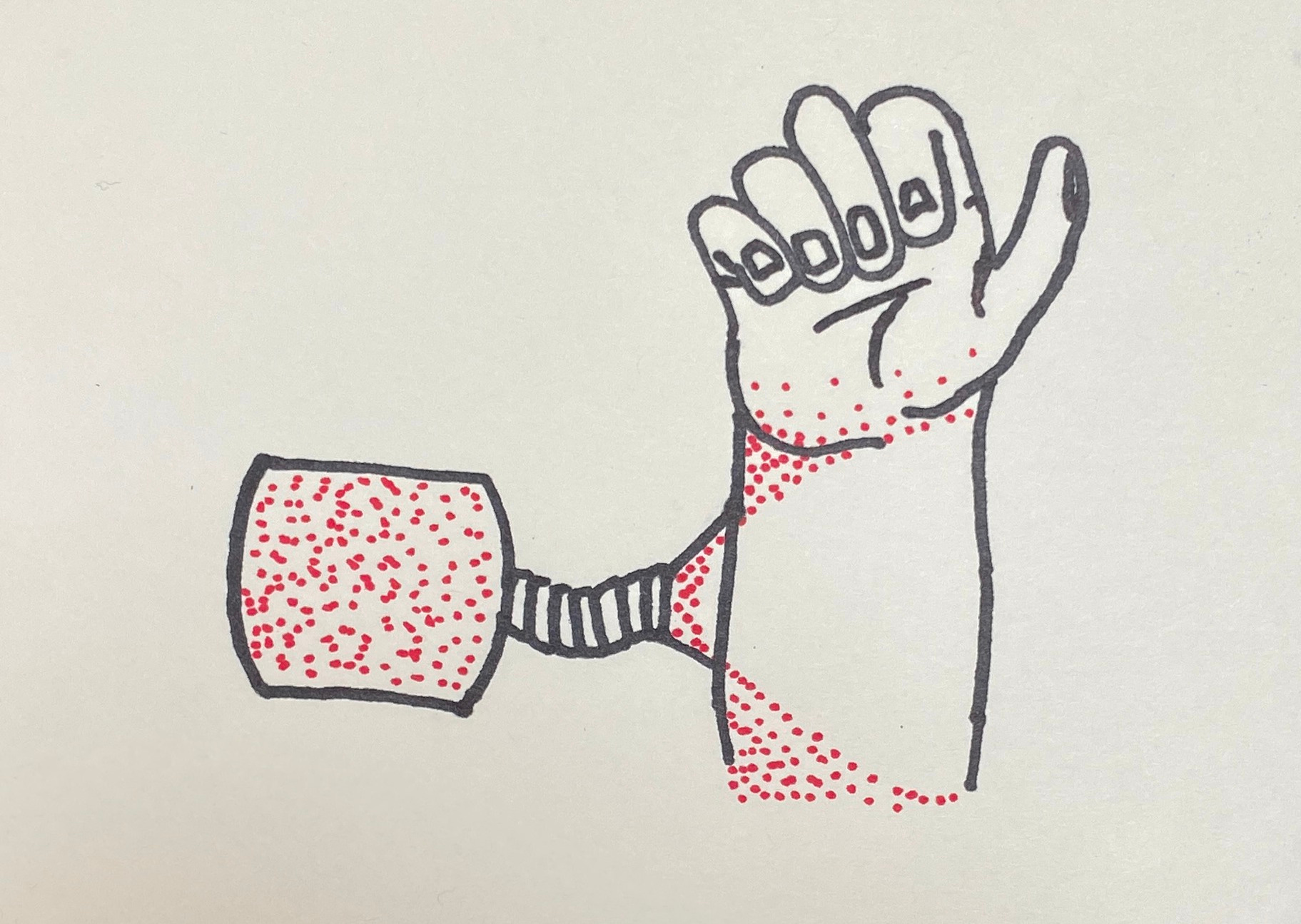
My mental journey began in Castle Rock, lying in the grass with a hat covering my face, relaxing in the sunshine after a long hike and a big lunch. Once I established that positive backdrop I was guided into a dialogue with my red field. I asked the field its purpose, learned that it was well-intentioned but perhaps miscalibrated to my present circumstances, and thanked it for its service. Then, in a lengthy ceremony, I disposed of it completely:
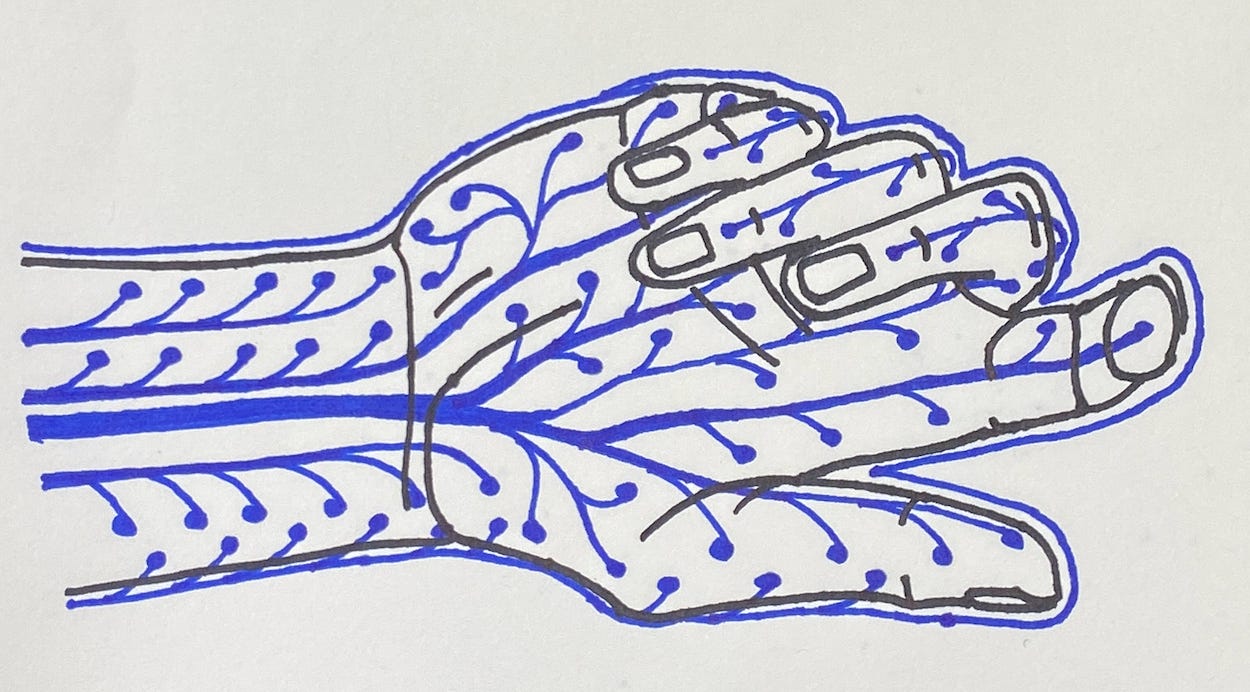
After that I designed a new piece of “software” to replace the field. I imagined a thin blue suit covering my entire body, lined with a network of tiny tubes. The suit would regulate my body’s resources, and with it donned, I was assured that whatever rest my body needed would take place naturally and without conscious intervention.
I imagined walking around with my new suit, first in Castle Rock, and later in a climbing gym. With my hypnotist’s guidance I accentuated the positive experiences of this new way of being: the freedom, the joy, and the boundless energy. In this new world my body was no longer problematic and my surroundings were once more full of possibilities. I stewed in these positive experiences then was guided out back into the real, unimagined world.
Immediate benefits in my daily life
After the session my hypnotist encouraged me to take practices into my daily life, including routines (like self-hypnosis) and ad hoc interventions (like the vagus-breathing exercise). And, I was to take my blue suit with me. Whenever I felt my field of pain / fear / confusion / tiredness, I imagined my blue suit working away, optimally managing and restoring those problematic areas, and I felt comforted.
For example, I went on my first trail run in many months soon after our session. I remember at one point losing energy and slowing down. Instinctually, the fear flashed:
You have exhausted yourself. Feel your body - are the symptoms there? You must be very careful.
But I remembered my suit, and thought:
My body will take care of itself. It has already slowed itself down, naturally. I need not worry.
The ground truth was the same - I was on a run, I did a lot of walking, I was tired. But when I remembered the suit, my fears relaxed.
On the reasonableness of hypnosis
For a year I was plagued by a fickle illness, never knowing when the next symptom would strike. It seemed that using my muscles would cause symptoms to worsen, and those symptoms largely struck the very same muscles. Of course that caused me to develop heightened awareness of my body’s warning signals, and with such heightened awareness it’s no surprise that the “red field” got ingrained.
Although the field seemed to communicate that my body still had fundamental issues, I couldn’t exactly take it’s existence as evidence of fundamental issues - it’s possible that the field was just hanging around. And indeed, after experiments with gradually reintroducing exercise, I started to believe that my underlying health dynamics were more favorable than the field was letting on, and that perhaps the field was causing me to be overcautious.
Or, put more simply: I spent a year in fear, hypnotizing my red field into existence. After such conditioning, it made sense to spend a few hours un-hypnotizing myself towards a more normal relationship to my body.
And indeed the blue suit I imagined was quite realistic: we all contain an optimized network of (blue) veins that carry unneeded matter away from our organs, in concert with energy-providing arteries. This circulatory system, and the rest of our body systems, perform well without conscious intervention. A miracle!
My outcomes and the recovery flywheel
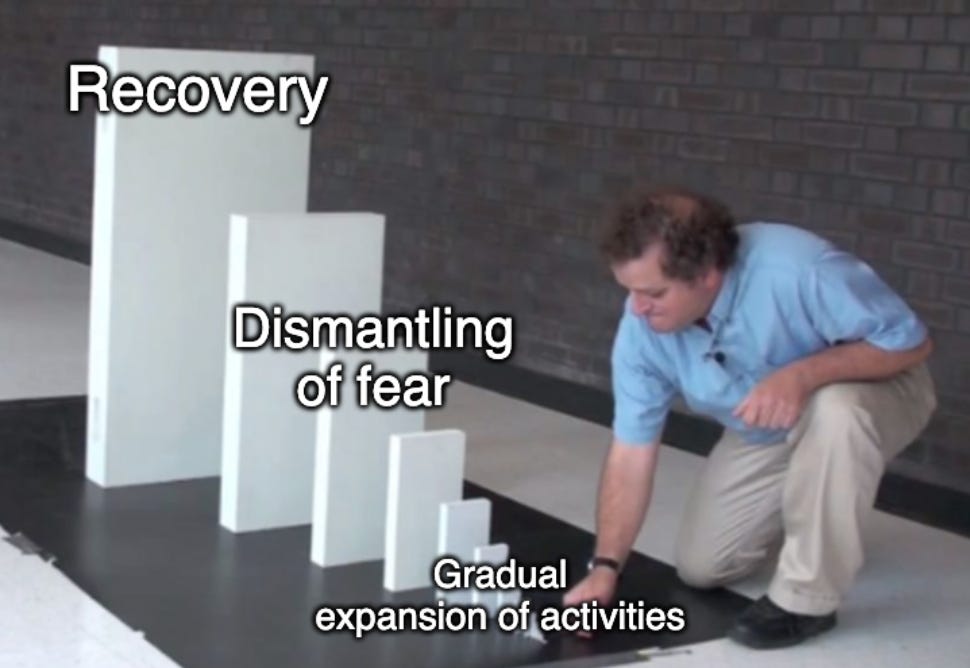
In the months following my sessions1 I experienced a recovery flywheel: as I reduced my fears and perceived symptoms I started maintaining gradually more intense exercise routines, and as I succeeded in these routines my fears further receded.
I think this “recovery flywheel” concept is critical to understanding my illness and how I got better. Such flywheels get stuck when perceived negative reactions to exercise outweigh perceived benefits. My own flywheel seems to have been stuck since I originally fell ill, and, while it’s hard to say for sure, it’s possible that my hypnosis sessions provided just enough grease (via lessening of fears) to get the flywheel back up and running.
To be clear, the effects of those sessions barely hold a candle to the fear-dismantling that occurred in the wake of my recent experiments with pushing through fatigue via exercising hard. There’s nothing like physically proving your perceived limitations to be spectacularly wrong. But still, when I look at the past months, it seems reasonable to suggest that my hypnotherapy contributed to a buildup of self-trust which allowed for my later more impactful experiments to take place.
At the very least I can say: my sessions were pleasant and my practitioner was a thoughtful guide. The practices I learned brought me comfort, and their introduction to my life coincided with an inflection point in my physical activity and health. Hypnosis seems to have been a helpful tool for my particular stage of post-viral-fatigue recovery.
I did a couple more sessions, though the follow-ups were less directly targeted towards fatigue.